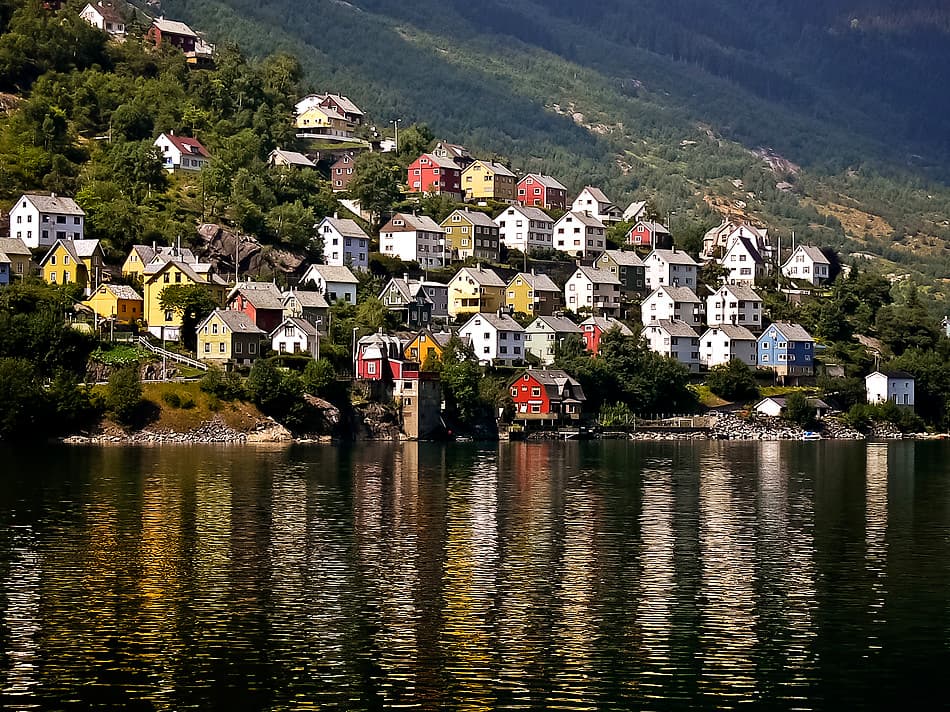
Hardangerfjord
Hardangerfjord stretches 179 km from the Atlantic coast to the inner valleys of Vestland. It is Norway's second longest fjord and runs through the heart of Norway's fruit-growing region.
About Hardangerfjord
Hardangerfjord stretches 179 km from the Atlantic coast to the inner valleys of Vestland. It is Norway's second longest fjord and runs through the heart of Norway's fruit-growing region. Forty percent of Norway's fruit grows in the orchards lining its shores.
The Hardanger Bridge spans 1,380 meters across the fjord, the longest suspension bridge in Norway. South of the bridge, Sorfjorden leads to Odda and the Trolltunga trailhead. North of it, the cideries along Fv551 open their farmgates from August through October.
This is not a fjord you cover in a day. The inner reaches around Eidfjord connect to Hardangervidda, the largest mountain plateau in Northern Europe. Folgefonna glacier sits above the southern shore with summer skiing on the plateau. The landscape shifts from coastal to alpine within a 2-hour drive.
Key facts
- Length
- 179 km
- Depth
- 891 m
- Bridge span
- 1,380 m
- Fruit production
- 40% of Norway
- Major glacier
- Folgefonna
- Trolltunga hike
- 27 km round-trip
Best time to visit
May to October (apple blossom May, harvest Aug-Oct)
What to do at Hardangerfjord
Hardangerfjord is 179 km of fjord, glacier, waterfall, and orchard. Trolltunga is the headline — but it demands 10 to 12 hours, not 6. Vøringsfossen and the cider farms are the experiences most travellers overlook. This fjord rewards slow travel.
Trolltunga: the full route from Skjeggedal
27 km round-trip with 800 meters of elevation gain. The rock ledge juts 700 meters above Ringedalsvatnet lake. Budget 10 to 12 hours — not 6, as many Instagram posts imply. A guide is required by Norwegian law from October 1 to May 31. In summer, the trailhead fills by 07:00 on weekends. Start before dawn or book a guided departure for the early slot.
Vøringsfossen: 182 meters into Måbødalen
Norway's most visited waterfall drops 182 meters into the Måbødalen valley, 2 km from Eidfjord on Rv7. The 2020 viewing platforms reach different angles of the falls. The upper platform is accessible by road from Rv7. The valley-floor view requires a 30-minute hike from Fossli. Both are worth it. Visit before 11:00 to beat the tour buses.
Hardanger apple harvest and cider trail
Forty percent of Norway's fruit grows along the Hardangerfjord shores. The orchards bloom pink in May and harvest from late August through October. Cideries at Aga, Lofthus, and Ullensvang open their farmgates during harvest season. The Hardangertun market at Lofthus runs on the third weekend of September with 50 producers.
Folgefonna glacier walk
Folgefonna is the third largest glacier in Norway. Guided walks depart from the Fonnabu visitor centre on the plateau above Jondal. Crampons and ice axe provided. The contrast between the fjord at sea level and the glacier at 1,200 meters is a 1-hour drive. No prior glacier experience required.
Getting There
How to reach Hardangerfjord
Norway's longest accessible fjord stretches 179 kilometres from the North Sea to Eidfjord. The Hardanger Bridge, Rv7 National Tourist Route, and E134 over Haukelifjell are the three main access axes. The fjord has no passenger ferry from Bergen — a car or bus is required to reach the inner villages.
From Bergen
E39 → Rv48 → Hardanger Bridge → Rv7 → Eidfjord/Norheimsund
The Bergen approach crosses the Hardanger Bridge — at 1,380 metres, the longest suspension bridge in Norway and one of the longest in the world when it opened in 2013. The route runs east on E39, branches onto Rv48 at Tysse, crosses the bridge into Kvam, then follows Rv7 east along the inner fjord to Eidfjord. For Odda and Trolltunga, continue south on Rv13 at Kinsarvik.
Hardanger Bridge toll
The bridge costs approximately 52 NOK by AutoPASS. Without AutoPASS, you will be photographed and invoiced by post. Set up AutoPASS before arrival at autopass.no if you plan multiple Norwegian toll crossings.
Norheimsund route alternative
An older ferry-free route via Rv49 and Rv7 through Granvin is slower but avoids the bridge toll. Add 30–40 minutes.
Public transport
Bus — Skyss / Nor-Way Bussekspress
Bergen → Norheimsund → Eidfjord → Odda (line 990/991)
Covers all major Hardangerfjord villages. Book at nor-way.no or use Skyss app.
Stops along the route
Hardanger Bridge viewpoint
+10 minThe bridge spans 1,380m across Eidfjord inlet. A roadside viewing area 2 km west of the crossing gives the clearest photograph without traffic.
Norheimsund
+20–30 minFirst significant fjord village, 80 km from Bergen. Steinsdalsfossen waterfall is 2 km inland — one of the few waterfalls you can walk behind. Petrol, grocery, and EV charging.
Kinsarvik
+10 minJunction village. Go straight for Eidfjord (Vøringsfossen). Turn south on Rv13 for Lofthus, Ullensvang, and Odda (Trolltunga).
Driver note
Petrol and EV charging at Norheimsund (80 km from Bergen), Kinsarvik (130 km), and Odda. The inner fjord villages between Kinsarvik and Eidfjord have no fuel. Do not arrive at Trolltunga with less than half a tank.
No ferry from Bergen to Hardangerfjord
Unlike Nærøyfjord and Sognefjord, Hardangerfjord has no passenger express boat connection from Bergen. The fjord is accessed exclusively by car, bus, or bus-and-train combination via Voss. The closest thing to a fjord boat experience is the historic Ullensvang–Kinsarvik car ferry (seasonal, 10-minute crossing) which connects the two shores of the inner fjord. Check Norled or Skyss for timetables.
Where to Base Yourself
Hardangerfjord basecamps
Hardangerfjord stretches 179 kilometres. Your basecamp choice determines which experiences are accessible within a day. Odda serves Trolltunga. Eidfjord serves Vøringsfossen. Lofthus serves the apple orchards and cider trail. Norheimsund serves the outer fjord and Bergen day-trippers. They are not interchangeable.
Odda
The Trolltunga capital
Odda sits where Sørfjord ends and the mountains close in. For most of the twentieth century, it was an industrial zinc and carbide town — the factory chimneys are still visible. Since Trolltunga became a phenomenon, the economy has pivoted hard toward outdoor tourism. This is where the majority of Trolltunga hikers sleep, eat, and prepare. The practical infrastructure for a 27-kilometre mountain hike — gear rental, shuttles, early-morning packed lunches, rescue insurance — exists here in a way it does not anywhere else on the fjord.
Best for
- •Trolltunga hikers
- •Multi-day Hardangervidda trekkers
- •Travellers with early morning departure plans
- •Budget to mid-range accommodation seekers
Not ideal for
- •Travellers who want to experience traditional fjord culture
- •Those seeking luxury hotel stays
- •Visitors focused on the apple orchard and cider trail
Accommodation
Trolltunga Hotel
Hotel900–1,800 NOK/night
Purpose-built for Trolltunga hikers. Gear storage, packed lunch service, shuttle pickup arranged at reception. Books out in July and August — reserve minimum 3 months ahead.
Check availabilityOdda Camping
Camping + Cabins200 NOK tent / 600–900 NOK cabin
On the fjord shore 2 km from town. Tent sites, caravans, and basic cabins. Shared facilities. EV charging. Shuttle to Trolltunga trailhead available.
Buer Gard Camping
Farm camping150–200 NOK tent
Seasonal farm camping closer to the Folgefonna glacier approach. Quiet, basic, operated by a working farm. No EV charging.
Where to eat
Hardanger Kafé
Café / Lunch150–250 NOK
Practical pre-hike fuel: porridge, sandwiches, packed lunch boxes. Opens at 06:30 in high season. Popular with guided tour groups departing at dawn.
Fjordkroken
Restaurant / Bar250–450 NOK
The most reliable dinner option in Odda. Norwegian staples — lamb, fish, reindeer — alongside pizza for those who exhausted themselves on the plateau. Booking recommended in July–August.
Odda ICA Supermarket
GroceryMarket prices
Full-service grocery for self-catering hikers. Buy your Trolltunga supplies here rather than paying inflated prices at trailhead vending machines. Open 0800–2200 daily in summer.
Services
Petrol station
Esso and Circle K in town
EV charging
Multiple fast chargers near town centre
Supermarket
ICA and Coop in town centre
Gear rental
Trolltunga Active and local outdoor shops rent poles, crampons
Pharmacy
One pharmacy in town centre
Medical clinic
Odda legesenter — book ahead or use emergency number 116117
Trolltunga shuttle
Seasonal shuttle from town to Skjeggedal trailhead. Book at trolltunga.no
Tourist information
Seasonal visitor centre near the harbour
Insider tip
Book the Trolltunga shuttle at the same time you book accommodation — it fills before the hotels do in July. The shuttle departs Odda bus station from 05:30 in peak season. Miss it and your only option is a 300-NOK each-way toll road to Skjeggedal, which adds real cost to an already expensive day.
Booking lead times — Hardangerfjord
Trolltunga season (Jul–Aug):
Book Odda accommodation 2–4 months ahead. Shuttle bus fills even faster.
Apple blossom (late Apr–mid May):
Ullensvang Hotel books up to 12 months ahead for blossom week. Plan a full year out.
Vøringsfossen peak (Jun–Aug):
Fossli Hotel and Eidfjord Fjordhotel: 6–8 weeks minimum in high season.
Shoulder season (May, Sep–Oct):
2–3 weeks generally sufficient. Some accommodation closes after mid-October.
When to visit
Summer (June to August)
June to August: Trolltunga is accessible without a guide. The fjord is busy but never as crowded as Geirangerfjord. Folgefonna offers summer skiing. The orchards are green but not yet ripe.
Winter (November to March)
Trolltunga requires a guide and full winter equipment from October. The Hardangervidda plateau roads close. The inner fjord villages are quiet. The Hardanger Bridge and main roads remain open year-round.
Itineraries that include Hardangerfjord
5-Day Hardangerfjord & Sognefjord: Bergen, Hardanger Bridge, Trolltunga, Vikafjellet, Balestrand, Bergen
10-Day Vestlandet Grand: the full Bergen to Alesund circuit
Plan your Hardangerfjord trip
Hardangerfjord is one fjord. Norway has 1,700. Explore the others or start planning your route.