Storseterfossen: walking behind a 30-meter waterfall above Geirangerfjord
Fosserasa is Norway’s first certified National Hiking Trail. 2.9 km from Vesteras farm, the path ducks behind a waterfall and the fjord disappears behind a curtain of white water.
The Fosserasa trail climbs 257 meters from a 17th-century summer farm to a rock alcove behind Storseterfossen waterfall. One of only six National Hiking Trails in Norway, and the only one where you walk behind the water.
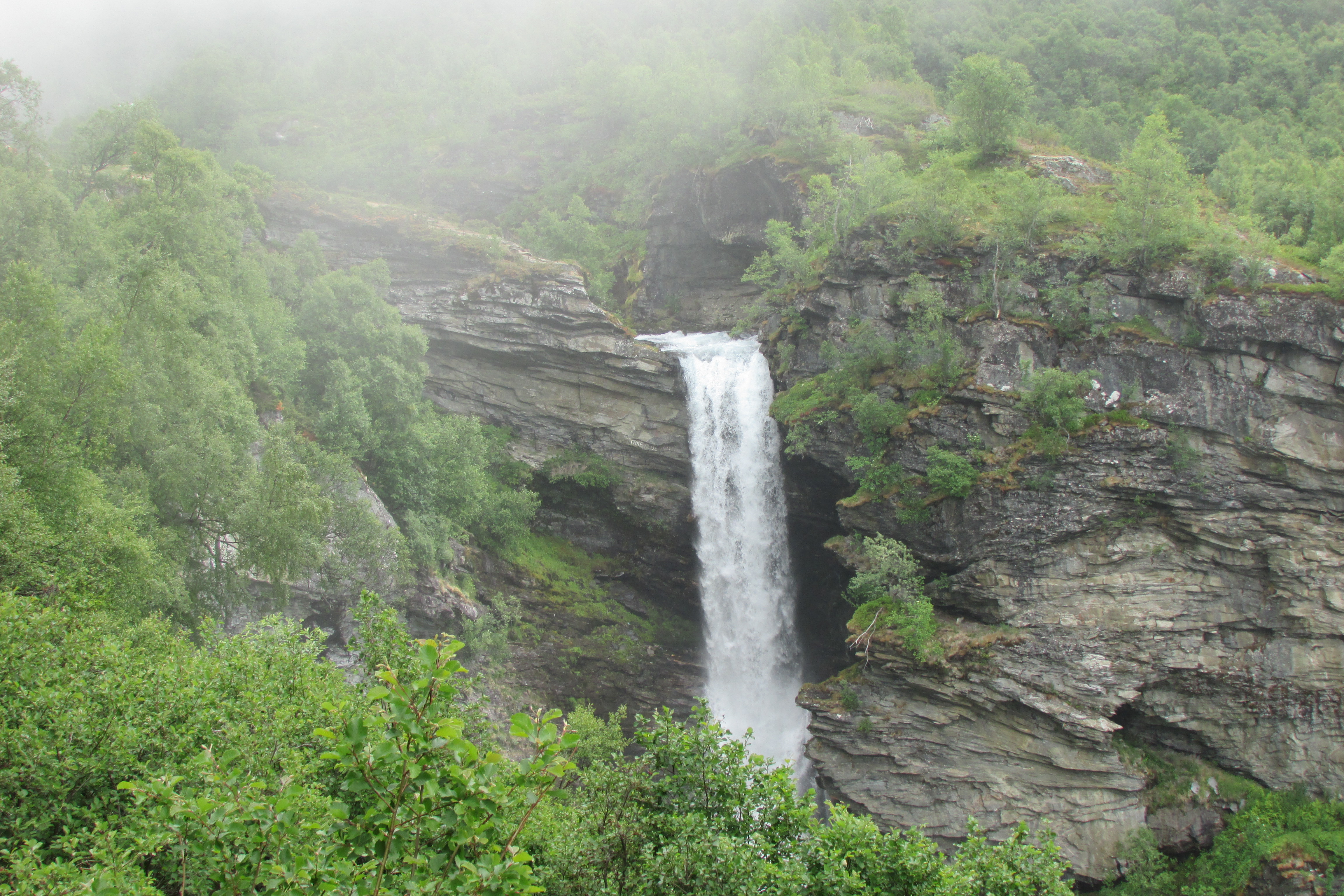
I have driven past the turnoff to Vesteras farm hundreds of times on the Rv63, usually in a rush to catch the Hellesylt ferry or beat the Trollstigen queue. It took a June morning with a cancelled sailing and four hours to kill before I finally turned left at Hole and drove the narrow gravel road up to the farm. That cancellation turned out to be the best logistical failure of my career.
Storseterfossen sits 540 meters above Geirangerfjord. The waterfall drops 30 meters off a rock ledge, and the trail leads directly behind it. You stand in a natural alcove with guardrails, water falling in front of you, and the sound drowning out everything except the question of why you did not do this years ago. The trail that gets you there, Fosserasa, was certified as Norway’s first Nasjonal Turiststi (National Hiking Trail) in 2019 and reauthorized in December 2024. It is one of only six trails in the country with that status. The other five: Besseggen, Kjerag, Preikestolen, Rødøyløva, and Trolltunga.
What this trail actually is
Fosserasa is a three-section trail connecting Geiranger village at sea level to Storseterfossen at 540 meters. Each section has its own character and its own grade.
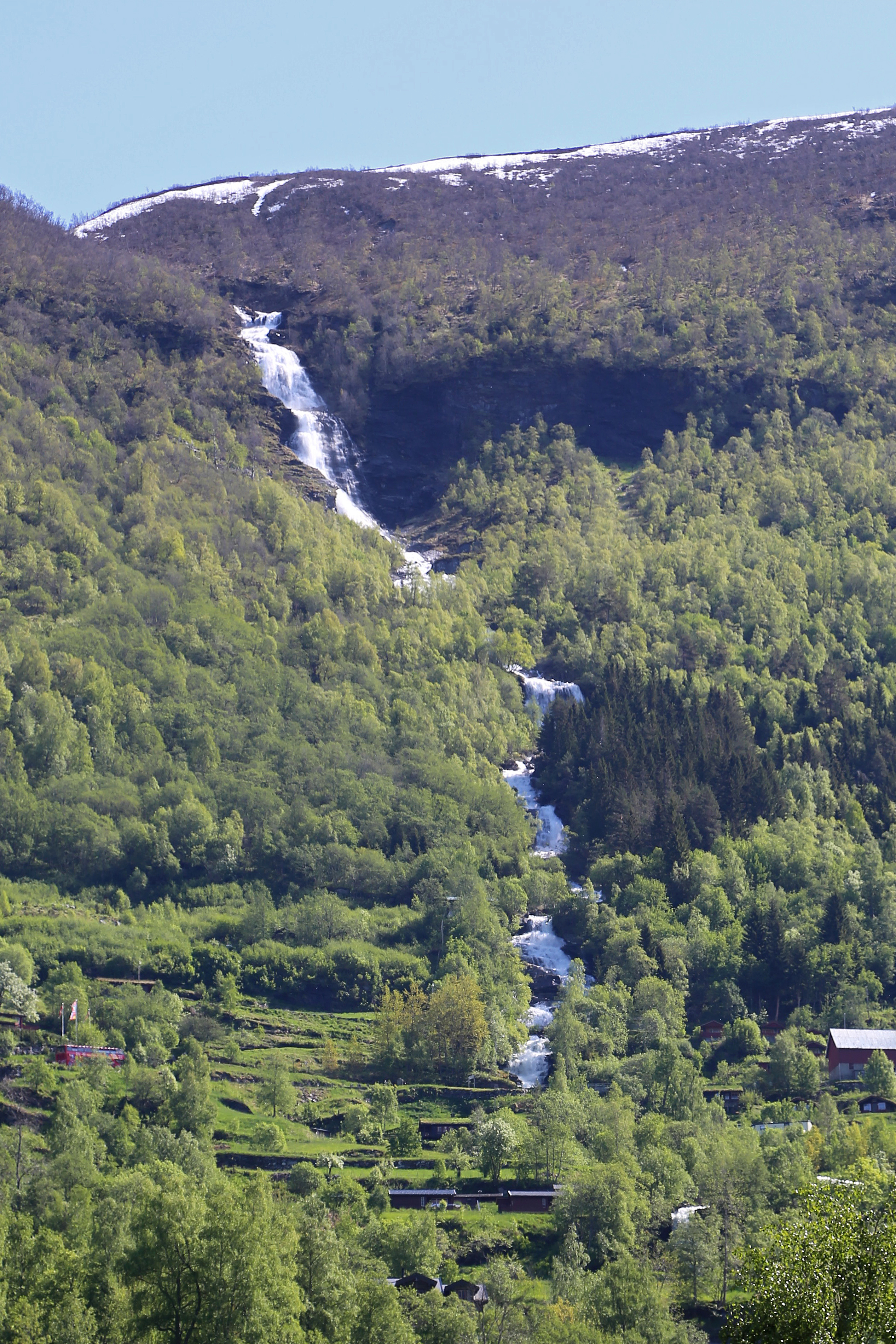
Section 1: Fossevandring (Waterfall Walk). From the cruise pier in Geiranger up to the Norsk Fjordsenter (Norwegian Fjord Centre). 1.2 km, 85 meters of elevation, 327 Corten steel stairs with handrails. Graded green (easy) by the Geirangerfjorden World Heritage Foundation. This section alone draws 180,000 visitors per year. You pass multiple waterfalls cascading directly into the village. Allow 30 to 40 minutes.
Section 2: The forest climb. From the Fjordsenter through the deciduous forest known locally as Morkja, past the historical farm buildings at Liastolen, up to Vesteras Gard farm at 320 meters. 1.5 km with Sherpa-built stone steps on the steeper sections. The stone pathway was constructed by Nepalese Sherpas and completed in 2014. Graded blue (medium). Allow 45 minutes.
Section 3: Vesteras to Storseterfossen. From the farm through rocky terrain and birch forest to the waterfall at 540 meters. 1.5 km, well signposted, with chains on one narrow section for assistance. Graded blue (medium). Allow 45 to 60 minutes. This is where the trail earns its reputation: the path descends to the right on a secured walkway with guardrails and passes directly behind the 30-meter cascade.
Two routes to the waterfall
You have a choice that changes the hike entirely.
The full route from Geiranger village: 4 km one way, approximately 500 meters of elevation gain, 2 to 2.5 hours ascending. You start at the cruise pier and walk through all three sections. The lower Fossevandring is worth doing in its own right. Budget 4 to 5 hours round trip including time at the waterfall.
The shortcut from Vesteras Gard: Drive 4 km up from Geiranger via the Rv63 turnoff at Hole. Park at the farm (100 NOK). From there, it is 2.9 km one way with 257 meters of elevation gain. Allow 1 to 1.5 hours up, 45 minutes to an hour down. Total: 2 to 3 hours including time at the waterfall.
If your time in Geiranger is limited, drive to Vesteras. If you have a full day and want the complete experience, start from the village. The Fossevandring steel stairs alone justify the extra effort.
What works
- The walk behind the waterfall. This is the reason to come. The path passes through a natural rock alcove with the full force of Storseterfossen falling in front of you. Guardrails keep you on the secured walkway. The spray is constant. You will get wet. Bring a waterproof jacket even if the sky is clear.
- The trail infrastructure. The Nasjonal Turiststi certification is not cosmetic. The Sherpa-built stone steps on the steeper sections are solid, the signposting is clear throughout, and the guardrails at the waterfall are well maintained. The Norwegian Environment Directorate (Miljødirektoratet) reauthorized the trail in December 2024 after confirming it meets all safety and maintenance standards.
- Vesteras Gard farm. The 17th-century seter (summer mountain farm) at the midpoint of the trail operates a seasonal restaurant with fjord views. Seter culture, the tradition of moving livestock to mountain pastures for summer grazing, was inscribed on the UNESCO Intangible Cultural Heritage list in 2024. This is not a reconstructed tourist attraction. The farm buildings are original. Eat here before or after the hike.
- The crowd ratio. 180,000 people walk the lower Fossevandring each year. Only 35,000 continue to Storseterfossen. The waterfall trail is quieter than the village walk by a factor of five. Arrive before 10:00 or after 16:00 and you will likely have the alcove behind the falls to yourself.
What does not work
- The slippery ground at the waterfall. The rock near and behind the falls is permanently wet. The guardrails help, but the surface is slick regardless of your footwear. Hiking boots with grip are non-negotiable. Trail runners and sandals are a mistake here. Multiple trip reports describe near-slips on the wet rock.
- The narrow road to Vesteras. The gravel road from the Rv63 turnoff to the farm is single-lane with limited passing places. In July and August, you will meet oncoming traffic. Drive slowly and use the pull-offs. The parking area at the farm holds roughly 30 cars. If it is full when you arrive, park at Hole by the main road and walk the extra 1.5 km.
- The season window. Snow can persist on the upper trail into June. The secured walkway behind the waterfall closes when ice makes it unsafe. The reliable window is mid-June through mid-September. Check with the Norsk Fjordsenter in Geiranger or Vesteras farm before starting if you are visiting in the shoulder weeks.
The honest assessment
Storseterfossen is not the tallest waterfall in Norway. It is not the most remote. What it is, specifically, is the best hike-to-waterfall ratio in the Geiranger area. From Vesteras, you invest 2.9 km and 257 meters of climbing. In return, you stand behind a 30-meter wall of falling water on a secured path that took Nepalese Sherpas and the Norwegian Environment Directorate years to build and certify.
The Nasjonal Turiststi status matters. Only six trails in Norway carry this certification, and Fosserasa was the first. The trail is maintained to a standard that most hiking routes in Norway do not reach. The stone steps, the signposting, the guardrails at the waterfall: these are not afterthoughts. They are the reason the Miljødirektoratet renewed the certification for another five years in 2024.
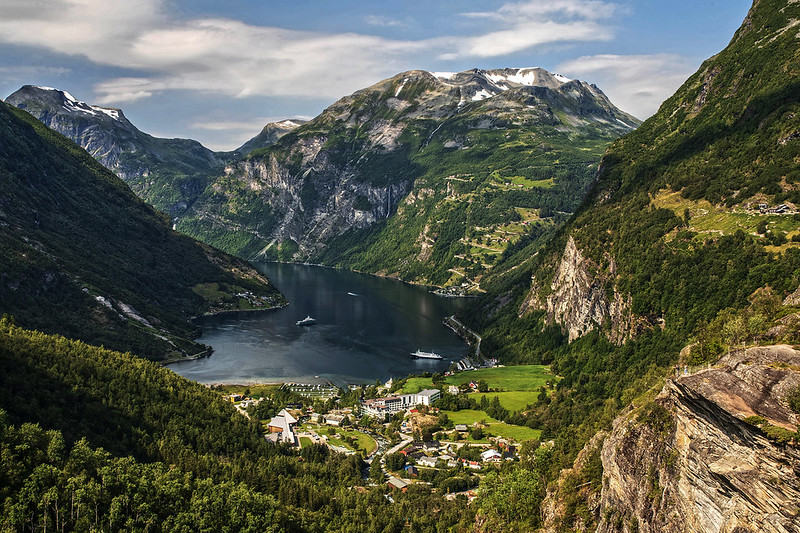
For travellers spending a day in Geiranger between the Eagle Road drive and the fjord cruises, this hike fills 2 to 3 hours and delivers something the viewpoints and boat tours cannot: the physical experience of standing inside the landscape rather than looking at it from a distance.
The logistics
| Detail | Information |
|---|---|
| Trail name | Fosserasa (Nasjonal Turiststi since 2019) |
| From Vesteras Gard | 2.9 km one way, 257 m elevation, 1–1.5 hrs up |
| From Geiranger village | 4 km one way, ~500 m elevation, 2–2.5 hrs up |
| Grade | Lower section: Green (easy). Upper section: Blue (medium) |
| Season | Mid-June to mid-September (snow dependent) |
| Trail fee | Free (no entry fee) |
| Parking (Vesteras) | 100 NOK (~30 spaces) |
| Vesteras farm restaurant | Open May to September (seasonal hours) |
| Waterfall height | 30 meters |
| Mobile coverage | Available along entire route |
| Trailhead GPS | Vesteras Gard: 62.1009°N, 7.2163°E |
| Emergency | 112 (police/rescue) or 113 (medical) |
Trail safety
Fosserasa is graded Blue (medium difficulty) on the upper sections. By DNT (Den Norske Turistforening) criteria, Blue requires elevation gain under 600 meters and distance under 10 km. This trail fits squarely within that range.
The Fjellvettreglene (Mountain Code) applies here as on every Norwegian trail. Three rules are directly relevant:
- Rule 2: Adapt the trip to ability and conditions. The upper trail has steep sections with exposed roots, large stone steps, and chains on one narrow passage. Proper hiking boots are required. This is not a flip-flop trail.
- Rule 3: Pay attention to weather and avalanche forecasts. The waterfall alcove is unsafe in thunderstorms. Lightning, wet rock, and an exposed metal guardrail are a combination you avoid. Check yr.no (the Norwegian Meteorological Institute forecast) before starting.
- Rule 4: Be equipped to help yourself and others. Bring a waterproof jacket for the waterfall spray, water, and a charged phone. Mobile coverage exists along the entire route, but the wet rock near the falls has caused slips. First aid basics matter here.
Who should hike this
- Day visitors in Geiranger with 3 hours to spare. Drive to Vesteras. Hike to the waterfall. Eat at the farm restaurant on the way down. This is the most rewarding half-day activity in Geiranger that does not involve a boat.
- Families with children over 6. The trail from Vesteras is manageable for older children in proper footwear. The walk behind the waterfall is the kind of experience that defines a trip for a child. The lower Fossevandring with its steel stairs is suitable for all ages.
- Cruise ship passengers. If your ship docks for 6 to 8 hours, you have time for the full village-to-waterfall route. Start from the pier, walk the Fossevandring, continue to Storseterfossen, and return via Vesteras if transport is arranged. Total: 4 to 5 hours.
Who should skip this
- Anyone with knee problems. The descent from the waterfall involves steep stone steps and uneven terrain. The 257-meter elevation loss from the waterfall to Vesteras is harder on the knees than the ascent is on the lungs. Trekking poles help.
- Visitors outside the June to September window. The upper trail and waterfall walkway close when snow and ice make them unsafe. The lower Fossevandring in Geiranger village remains accessible year-round and offers frozen waterfall views in winter, but Storseterfossen itself is a summer trail.
- Travellers who dislike getting wet. The walk behind the waterfall soaks you with spray. A waterproof jacket is essential. If you skip the jacket, you will be damp for the descent. In July, this is uncomfortable. In September, it is cold.
Ingrid Solheim is the Fjord Logistics Editor at NorgeTravel. She spent eleven years putting tourists into rental cars in Bergen and watching them drive off with itineraries that were never going to work. Her guides are written so that does not happen to you. She can be reached at hei@norgetravel.com.
Images: Storseterfossen waterfall by W. Bulach (CC BY-SA 4.0, Wikimedia Commons). Waterfall close-up by Yaakov (CC BY-SA 4.0, Wikimedia Commons). Geiranger panorama by NorgeTravel.