What to pack for Arctic Norway, month by month
From polar night at -20°C to midnight sun at +15°C. The layering system changes every six weeks.
Arctic Norway is not one climate. It is eleven distinct packing problems spaced across the year. The temperature range from January in Longyearbyen to July in Tromsø is over 40 degrees Celsius. A field-tested, month-by-month packing guide from 25 years of Arctic guiding.
In 25 years of guiding in Nord-Norge and Svalbard, the most common mistake I see is the single-layer approach. Visitors arrive in one heavy jacket, cotton jeans, and waterproof shoes bought for autumn in Berlin. Then the weather changes, and they spend three days indoors.
Arctic Norway is not one climate. It is eleven distinct packing problems spaced across the year. The temperature range from January in Longyearbyen to July in Tromsø is over 40 degrees Celsius. The daylight range is from zero to 24 hours. No single packing list covers it.
Here is what works for each month, based on conditions I have personally field-tested. Use it as a baseline. Then check the actual forecast the week before you travel and adjust.
The layer system that underpins everything
Arctic packing is not about having warmer clothing. It is about the layering system. Three layers, each with a specific job, all working together.
- Base layer. Wool or synthetic, long-sleeve top and bottom. Merino wool at 200 g/m² is the Norwegian default. Never cotton.
- Insulation layer. Fleece (200-weight or heavier) or down jacket. Traps body heat. Replaceable if it gets damp.
- Shell layer. Windproof, waterproof jacket and trousers. Blocks wind and precipitation. This is what keeps the insulation layer working.
You add or remove the insulation layer based on conditions. You keep the base and shell on whenever you are outside. This system handles everything from +10°C in a shoulder month to -25°C in February.
The cotton prohibition
Cotton in Arctic Norway kills. Cotton absorbs sweat, holds it next to the skin, and accelerates heat loss by conduction. A wet cotton base layer in -10°C wind is how hypothermia starts. Leave the cotton t-shirts, cotton underwear, and cotton jeans at home. Replace with wool or synthetic across every layer that touches skin.
January: the coldest month
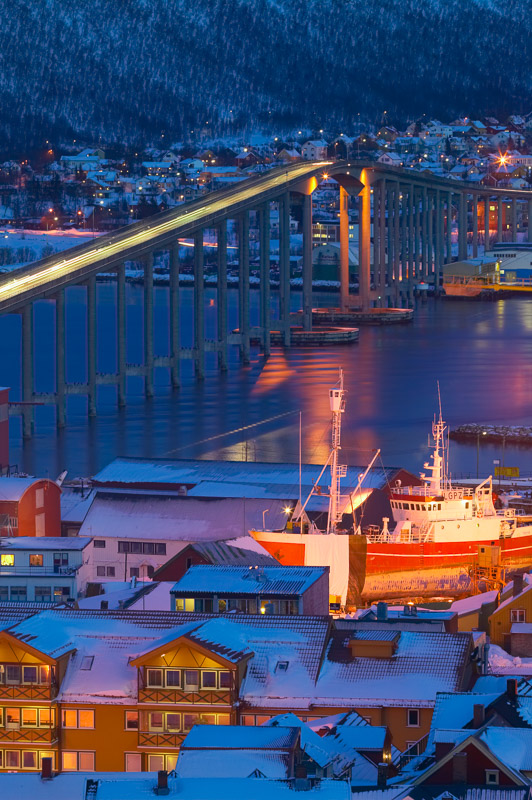
Average Tromsø temperatures: -4°C daytime, -8°C night. Svalbard: -16°C daytime, -20°C night. Polar night is in full effect. The sun does not rise in Tromsø until January 21. In Longyearbyen, the sun does not return until mid-February.
What to pack:
- Base layer: 200 g/m² merino wool top and bottom (two sets if you are out for more than three days)
- Mid layer: heavy fleece (300-weight) or down jacket (600-fill minimum)
- Shell: insulated parka rated to at least -20°C, waterproof overtrousers
- Boots: winter boots rated to -30°C with a removable felt liner (Sorel Caribou, Baffin Impact, or Alfa Lotus)
- Hat: wool beanie that covers the ears, plus a balaclava or buff for the face
- Gloves: two pairs, a thin liner glove and an insulated mitten. Mittens beat gloves below -10°C
- Wool socks: three pairs minimum (rotate daily, keep one pair dry)
- Microspikes or Nordic studs: the pavements in Tromsø are ice from December to March
February: the stable cold
Averages similar to January but with returning daylight (Tromsø reaches 7 hours of twilight by month's end). The aurora season is at its peak window alongside early March. The air is often drier and clearer than in January, which makes the perceived cold less severe even at similar temperatures.
Changes from January:
- Daylight is returning. Pack sunglasses. Snow glare on a clear February day is intense.
- The aurora is visible whenever the sky is clear. A camera with manual mode and a tripod are worth the bag weight.
- Svalbard snowmobile season begins in earnest. If you are booking a tour, the operator supplies the heavy outer layer. Pack your own base and mid layers.
March: the shoulder of winter
Averages: -2°C daytime, -6°C night in Tromsø. Daylight returns rapidly (12 hours by month's end). This is the best month for winter activities: ski touring, dog sledding, snowmobile. Conditions are stable, the days are usable, and the crowds are lower than February.
Changes:
- Drop one layer of mid-weight from the January list if you run warm. Most people still want the full system.
- A thinner pair of gloves works for mid-day activity. Keep the mittens for standing or photography.
- Gaiters: if you are doing any off-piste walking, the snow is deep enough that low gaiters keep your boots dry.
April: the melt starts
Averages: +1°C daytime, -3°C night. Tromsø daylight is 16 hours by month's end. The snow is melting in the city. At altitude and in the interior, winter conditions persist. Svalbard stays in winter mode until mid-May.
Key adjustments:
- The cold-weather boots are overkill for the city. Pack waterproof hiking boots and keep the winter boots for cold-weather activities.
- Layer flexibility matters. A morning at -5°C can turn into an afternoon at +6°C with strong sun. Be able to remove the mid-layer.
- Rain is back. The shell layer gets its summer workout starting in late April.
May: Arctic spring
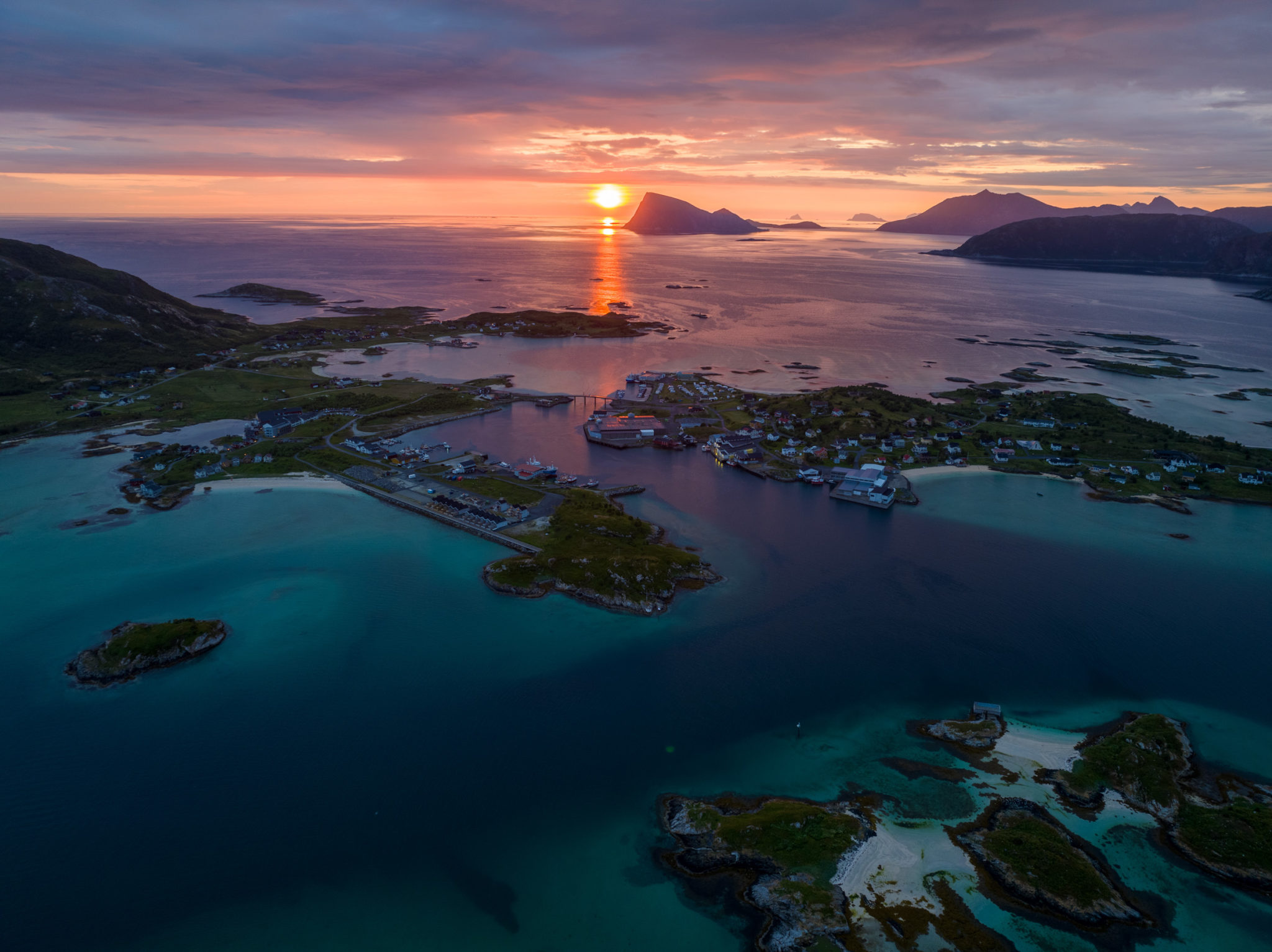
Averages: +6°C daytime, +1°C night. Midnight sun begins in Tromsø on May 18. The hiking season opens below 500 meters. Above 500 meters, winter conditions can persist into June.
Packing adjustments:
- Hiking boots replace winter boots for most travelers
- The shell layer stays. Arctic weather does not care that it is spring
- A lighter fleece replaces the heavy mid-layer for low-altitude activity
- Sleep mask: the midnight sun means your hotel room will not get dark. Blackout curtains are not standard in rural accommodation
- Bug repellent: the blackfly and mosquito season starts late May and runs through July
June: high summer, full light
Averages: +12°C daytime, +5°C night in Tromsø. Svalbard: +4°C daytime, 0°C night. The sun does not set in Tromsø from May 18 to July 26. Hiking season is in full effect. Snow lingers above 800 meters through late June.
What works:
- Full three-layer system still required for any summit or exposed hike. Summit temperature drops 6°C per 1,000 meters of elevation gain
- Sun protection: sunscreen SPF 30 or higher, sun hat, polarised sunglasses. Arctic sun at 24-hour strength burns skin faster than mid-latitude sun
- Midnight sun sleep kit: eye mask, earplugs
- Insect repellent with DEET 30% or higher (the Arctic species are aggressive)
- Lightweight down jacket: evenings on the water or at altitude drop below 10°C
July: peak summer
Averages: +15°C daytime, +8°C night in Tromsø. The warmest and wettest month. Svalbard: +7°C daytime, +3°C night.
Same as June but:
- Add one quick-dry t-shirt for warm low-altitude days (still synthetic, not cotton)
- Shorts are usable on warm valley hikes. Pack one pair
- Swimwear: the sea is technically swimmable at 12°C. Most locals prefer the arctic bath ritual (sauna plus cold dip) to swimming
- Insect net hat: on Finnmarksvidda and inland hiking, a mosquito head-net is the difference between a tolerable walk and a ruined one
August: the last warmth
Averages: +14°C daytime, +8°C night in Tromsø. The weather starts cooling in the second half of the month. The midnight sun ends around July 26, but the nights remain light enough that true darkness does not return to Tromsø until late August.
Same as July but:
- Aurora season restarts around August 21 once astronomical darkness returns. Pack a tripod if you are there in the last week
- The heavier fleece returns as the default mid-layer. The lightweight down stays packed for summit days
- Rain: August is consistently wet in coastal Nord-Norge. The shell layer works harder than any other month
September: autumn arrives fast
Averages: +9°C daytime, +4°C night in Tromsø. First snow at altitude typically in the second half of the month. Daylight drops to 12 hours by month's end. Aurora season is fully open.
Adjustments:
- The shoulder jackets from April work again
- Waterproof hiking boots with a warmer sock
- Add a warm hat and gloves to the daily carry. Most travelers underestimate how much colder it gets at dusk
- Rain pants: September is the wettest month of the year in much of coastal Nord-Norge. Shell trousers are not optional for any outdoor day
October: the edge of winter
Averages: +4°C daytime, 0°C night in Tromsø. First substantial snow in the lowlands typically in the last week. Studded tires become legal October 15 and mandatory in practice on most rural roads by month's end. Svalbard enters polar night in late October.
Transitioning to winter:
- Winter boots return, but insulated hiking boots still work for day activity
- Full winter shell system, including overtrousers
- Hat, gloves, and buff are daily wear
- A headlamp is essential. The daylight window is shrinking below 9 hours and dropping fast
- If you are driving, winter tires are required. The rental car will have them from October 15 onward
November: polar night begins
Averages: 0°C daytime, -4°C night in Tromsø. The sun stops rising on November 21 in Tromsø, not returning until January 21. In Longyearbyen, the sun already disappeared in late October.
Critical packing:
- Full winter system. Assume January conditions. November in a bad year is colder than January in a good year
- Headlamp with two sets of spare batteries (batteries drain faster in cold)
- Reflective strips on jacket and bag. You will be walking in the dark in Tromsø at 14:00
- Microspikes or Nordic studs for ice walking
- Aurora kit: tripod, camera with manual mode, warm gloves that allow finger use for camera controls
December: the depth of polar night
Averages: -2°C daytime, -6°C night in Tromsø. Svalbard sits in the -12°C to -16°C range. Total darkness around the clock in both locations. The sun makes no appearance, but twilight gives 3 to 4 hours of workable light in Tromsø mid-month.
Same as November but:
- Every outer layer is heavier. The cold is cumulative after several days
- Hand warmers (chemical single-use) in every pocket. Buy them in bulk from any Tromsø pharmacy
- Two base layer sets: one to wear, one to dry. Drying time in cold hotel rooms is slow
- Moisturiser and lip balm: the dry cold air causes cracked skin within 48 hours
Svalbard: add one tier
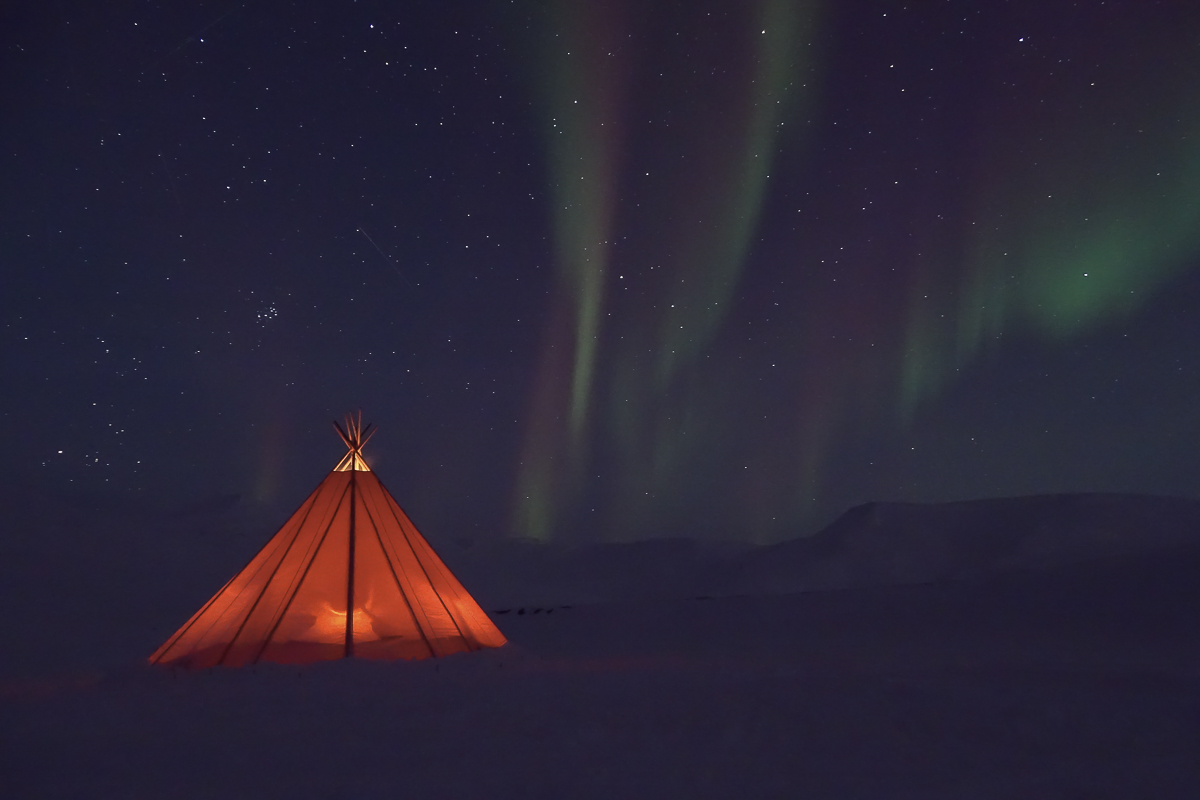
Everything on this list assumes mainland Nord-Norge (Tromsø, Alta, Narvik). For Svalbard, add one tier to the warmth rating of every layer. Svalbard temperatures run 5 to 8°C colder than Tromsø in winter. The wind on the fjords is more severe. The polar night is longer and darker.
Specific Svalbard additions:
- Heavier parka rated to -30°C for November through March
- Overmitts to go over your gloves or mittens
- Hand warmers are not optional; they are consumables
- Camera batteries carried in an inside pocket against body heat. Cold drains them in 20 minutes otherwise
- Sun goggles: the combination of March to May sun on Svalbard snow is brighter than anywhere in the Alps
Electronics in the cold
Lithium-ion batteries lose 40 to 50 percent of their capacity at -10°C. Smartphone batteries drop from 100% to 20% in under an hour if exposed. Camera batteries fail faster.
What to do:
- Carry spare camera batteries in an inside pocket against body heat
- Put your phone in an inside pocket between uses
- Bring a powerbank. Carry it in the same inside pocket
- Disable GPS on your phone if not in use (it drains faster in cold)
- Do not rely on your phone for navigation above 800 meters. Printed maps and a compass work at any temperature
The boot question
The most common packing question I get is about boots. The answer depends on the month.
November to March: Winter boots rated to -30°C, with a removable felt liner. Sorel Caribou, Baffin Impact, Alfa Lotus, or equivalent. For activity (snowmobile, dog sledding, skiing), the operator supplies thermal overboots.
April and October: Transition months. Waterproof hiking boots with warm wool socks work for most days. Winter boots for any day below -5°C.
May to September: Waterproof hiking boots with ankle support. For summit hikes above 800 meters in June and early September, a more technical boot (B1 rating) with a stiffer sole is recommended for lingering snowfields.
Do not bring trail runners, sneakers, or anything with mesh uppers for temperatures below +5°C. The feet will get wet within the hour.
Fjellvettreglene Rule 4: be equipped for bad weather
The Fourth Mountain Code rule states: be prepared for bad weather and frost, even on short trips.
In Arctic Norway, this rule is the most load-bearing of the nine. The weather can change in 20 minutes. A clear valley morning becomes a summit whiteout by noon. A calm fjord crossing at 10:00 turns into a 15-knot squall by 12:00. The packing list above is the minimum for a short hike in any month. For an overnight or a multi-day trip, add redundancy: spare base layer, spare socks, spare gloves, emergency bivvy bag.
The non-negotiable list (any month)
Regardless of season, these items are in the pack every day above the treeline or on exposed coastline:
- Wool or synthetic base layer (no cotton)
- Shell jacket, windproof and waterproof
- Hat and gloves (even in July, for exposed terrain)
- Headlamp with spare batteries
- 1:50,000 topographic map and compass
- First aid kit including emergency bivvy
- Food and water for the planned time, plus a margin
- Charged phone (but not as the primary navigation tool)
- Emergency number: 112
Emergency: 112
Norwegian emergency services. Works from any phone across any network. Call early if something is going wrong. Rescue teams in Arctic conditions need time to mobilise. Longyearbyen search and rescue operates under Sysselmesteren (the Governor of Svalbard). Mainland SAR is coordinated by the Røde Kors Hjelpekorps and regional police.
The short version
Arctic packing is not complicated. It is specific. Three layers: base, mid, shell. No cotton. Boots matched to the month. Batteries kept warm. Headlamp when the daylight drops. Shell jacket every month of the year.
Get that right and the Arctic rewards the effort. Get it wrong and you spend the trip in a hotel lobby watching the weather through the window.
Bjørn Haugen is the Arctic Field Editor at NorgeTravel. DNT-certified guide with 25 years of experience across Nord-Norge and Svalbard. Former Røde Kors Hjelpekorps volunteer in Tromsø. He can be reached at hei@norgetravel.com.